Aerospace CNC Machining Challenges and Quality Controls
Aerospace CNC machining is difficult for a reason: the drawing may combine thin walls, deep pockets, complex surfaces, difficult alloys and tightly controlled interfaces in one part. Producing the geometry is only one part of the job. The manufacturer may also need to control material identity, drawing revisions, special processes, inspection records and changes between production runs.
For buyers, this means that a supplier should be evaluated on more than its machine list or its smallest advertised tolerance. The stronger question is whether the supplier can build a controlled process around the specific drawing and provide the required evidence of conformity.
This guide explains the main machining risks, how manufacturers control them, and what aerospace buyers should include in an RFQ. For commercial support, visit MXY’s aerospace CNC machining services page.
Why Aerospace Parts Are Difficult to Machine
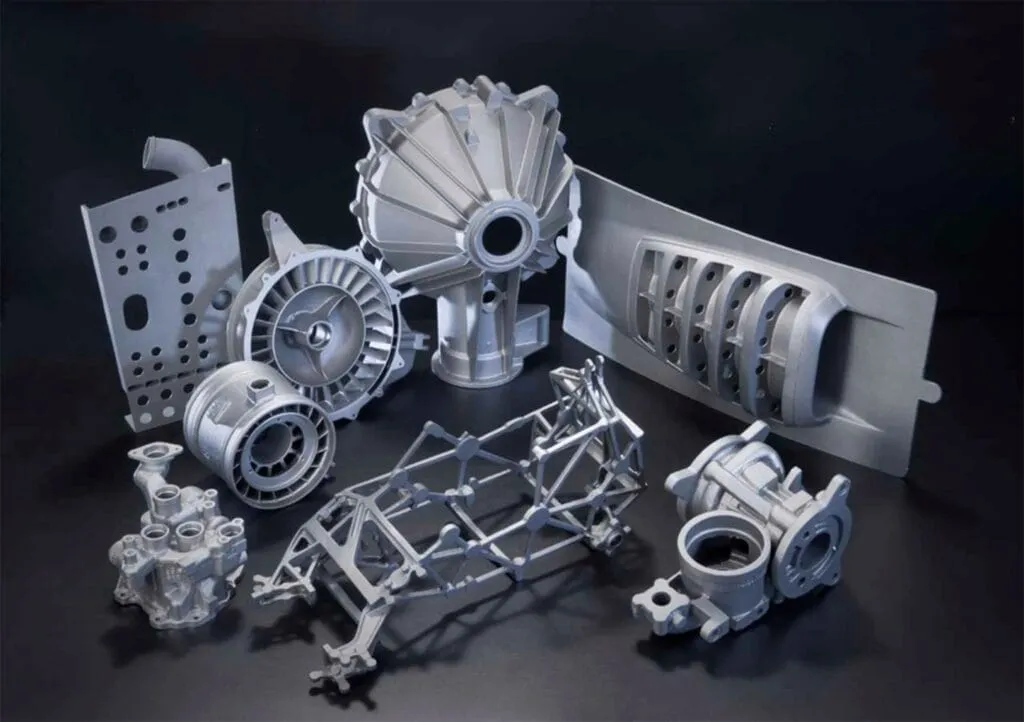
Aerospace parts are difficult to machine because they often combine complex geometry, thin walls, deep pockets and tightly controlled features in a single component. Parts such as structural brackets, housings, impellers and flight-control components may require multiple machining angles while maintaining precise relationships between holes, surfaces and datums. Thin sections can bend under cutting forces, while deep cavities may require long tools that are more susceptible to vibration and deflection. These conditions make workholding, tool selection and machining sequence critical to dimensional accuracy.
Material selection introduces further challenges. Aerospace manufacturers commonly use aluminum, titanium, stainless steel and nickel-based superalloys because of their strength, weight or resistance to heat and corrosion. Titanium and nickel alloys generate significant heat and accelerate tool wear, while thin aluminum components can distort as internal stress is released during material removal. Each alloy therefore requires suitable cutting tools, machining parameters, coolant delivery and chip-control strategies.
Quality requirements also extend beyond producing the correct geometry. Manufacturers may need to control material traceability, drawing revisions, special processes and inspection records throughout production. Critical features might require in-process checks, final dimensional inspection and first-article documentation. The machining process must consequently account for the part’s geometry, material, tolerance, surface finish, production quantity and documentation requirements as one connected manufacturing plan.
Aerospace Materials and Their Machining Risks
Aluminum Alloys
Aerospace aluminum alloys such as 6061 and 7075 are widely used for brackets, housings, structural components and test hardware. They offer a useful strength-to-weight ratio and can be machined efficiently, but that does not make every aluminum part simple.
Thin sections can move as residual stress is released. Large pockets may distort after heavy material removal. Long, slender features can vibrate, and cosmetic surfaces can be damaged by poor chip evacuation or handling. Process planning may require balanced stock removal, staged roughing and finishing, suitable workholding, controlled tool engagement and inspection after the part has stabilized.
If anodizing is required, the drawing should identify masked areas, threaded features, electrical-contact surfaces and dimensions that must be controlled after finishing. See MXY’s guide to [anodizing tolerances for CNC parts](https://mxymachining.com/anodizing-tolerances-cnc-parts-fits-threads/).
Titanium Alloys
Titanium alloys such as Ti-6Al-4V combine high strength with low thermal conductivity. Heat remains concentrated near the cutting edge, which can accelerate tool wear. Titanium can also produce high cutting forces, chatter and difficult chip behavior when the toolpath, tool geometry, coolant delivery or setup lacks stability.
A robust process may use rigid workholding, sharp tools intended for titanium, controlled radial engagement, appropriate cutting data, effective coolant delivery and a tool-life strategy. The manufacturer should monitor wear before it causes dimensional drift or surface damage. Tool choice should come from validated machining data rather than a generic claim that one coating works for every titanium operation.
Nickel-Based Superalloys
Nickel-based alloys such as Inconel 718 retain strength at elevated temperatures, which is valuable in demanding applications and difficult in the machine shop. These alloys can work-harden, generate substantial heat and wear cutting edges quickly.
Successful machining depends on maintaining a stable cut, avoiding unnecessary dwell or rubbing, managing tool engagement and replacing tools before wear affects the part. Feature geometry, material condition, heat treatment and surface-integrity requirements can change the process substantially.
Engineering Plastics and Composites
Some aerospace assemblies also use engineering plastics or reinforced composites for insulation, low-friction components, lightweight structures and electrical applications. These materials present different risks: moisture absorption, heat sensitivity, delamination, abrasive reinforcement, burrs, dust control and dimensional change after machining.
The RFQ should identify the exact material grade and applicable specification. A family name such as “PEEK,” “nylon” or “carbon composite” is not enough when compliance or final performance depends on grade, reinforcement, conditioning or traceability.
When 5-Axis Machining Helps
Five-axis machining is useful for aerospace parts with complex contours, angled holes and surfaces that must be reached from several directions. The machine can position the cutting tool and workpiece across five axes, allowing multiple faces to be completed in one setup. Reducing the number of setups helps maintain relationships between holes, datums and machined surfaces while lowering the risk of repositioning errors. It can also shorten production time and allow shorter, more rigid cutting tools to reach deep pockets or features with less vibration and deflection.
Common applications include impellers, turbine components, structural brackets, housings, ducts and parts with compound angles. However, simultaneous five-axis machining is not required for every aerospace component. Indexed 3+2 machining or three-axis machining may be more stable and economical for simpler geometry. The best approach depends on the part design, material, tolerances, tool access, production quantity and inspection requirements specified on the engineering drawing.
Controlling Thin Walls, Distortion and Thermal Drift
Thin-wall aerospace parts can change shape during machining because of cutting forces, residual material stress, clamping pressure and temperature. A dimension measured immediately after a heavy cut may also differ after the part returns to a stable temperature.
A process plan may address these risks through:
1. Datum and stock planning: Select stock condition, machining datums and setup sequence around the drawing requirements.
2. Staged material removal: Leave controlled finishing stock after roughing instead of completing fragile features too early.
3. Balanced machining: Remove material in a sequence that limits uneven stress release.
4. Workholding control: Support the part without distorting it and define repeatable clamping conditions.
5. Toolpath control: Limit abrupt engagement changes and use strategies appropriate for long-reach or thin-wall features.
6. Temperature management: Control coolant, machine warm-up and measurement conditions when thermal change is significant.
7. Intermediate verification: Inspect risk features at planned stages while correction is still possible.
8. Final stabilization and inspection: Verify the finished part under the conditions required by the drawing or inspection plan.
Challenges of Machining Complex Aerospace Parts
Aerospace components often feature intricate, sculpted designs that can be tremendously difficult to machine with high precision. Turbine blades, wing assemblies, and other critical parts routinely require tight tolerances within a few millionths of an inch over complex three-dimensional geometries. Intricate detail work like cooling holes and finely sculpted edges also push the limits of machining technology.
At the same time, aerospace manufacturing typically involves relatively low production volumes. This makes pre-programming and proving out processes on first articles particularly important. Setup and fixture errors that may be absorbed in high-production industries can be devastating for aerospace.
Adding to these challenges, aerospace widely uses corrosion-resistant metals like titanium and nickel alloys that are very difficult to machine. Materials like Ti-6Al-4V titanium and Inconel 718 nickel superalloys are exceptionally strong and hard, requiring specialized tool coatings and machining parameters. Issues like work hardening, galling, and welding are also far more prevalent with these metals compared to aluminum.
The demands of precision and quality are taken to the highest degree in aerospace manufacturing due to the critical role of components and potentially catastrophic impacts of failures. A single faulty part could take down an aircraft or spacecraft. In aviation, even minor tolerancerelated issues discovered post-production can require fleets to be grounded until repairs are performed. This underscores why tolerances must be held to within millionths of an inch and why process control is paramount.
Capabilities of Modern CNC Machine Tools for Aerospace
Five-axis and multi-tasking machining centers have become essential for the intricate geometries common to aerospace component design. Instead of sequential 3-axis operations, 5-axis simultaneous machining allows complex contours to be cut in a single set-up. Multi-tasking capabilities like turning, milling, drilling and grinding also boost throughput.
Advanced engineering features contribute directly to the high precision demanded for aerospace applications. Direct-drive motors with closed-loop feedback control position axes more accurately than traditional screw-driven systems, minimizing lead error and vibrations. Rigid cast iron or granite constructions also dampen structural deflection under heavy cuts better than cheaper variants.
Modern controls deploy thermal stabilization techniques to minimize drift over extended periods. Automatic thermal compensation and enclosures help maintain tight tolerances despite ambient temperature fluctuations that could cause machine components to expand or contract imperceptibly. Some aerospace machine tools even regulate humidity and filtration for especially temperature-sensitive work.
Special abilities let CNC machines tackle the demands of common aerospace metals like titanium. Features include high-pressure coolant delivery for better chip evacuation from tight spaces, as well as wet or dry drilling capabilities. Diamond-coated tools provide longer life when broaching titanium. Live tooling allows in-fixture tapping and threading for multi-tasking. Through-spindle coolant supplies coolant directly to the cutting interface.
Combining five or more axes of control with these design attributes delivers the precision required for intricate aerospace details, all in a robust, rigid package suitable for long production runs with stable tolerances. Advanced machine tools have therefore become an indispensable element in aerospace CNC machining.
Achieving High Tolerances for Aerospace Components
Maintaining stringent tolerances over successive parts and extended runs is critical in aerospace manufacturing. Modern CNCs support this need through automatic tool length compensation (TLC) functions. As cutting tools wear over time, TLC minimizes the impact on dimensions by adjusting offsets in response to actual tool length measurements.
Advanced machine probing cycles have also become indispensable for precision aerospace work. Touch probes equipped with non-contact scanning capabilities verify setup accuracy and fixturing repeatability. In-process probing then checks feature locations, sizes and geometries to catch any drift before it translates to non-conforming parts.
The drives and scales that directly impact positioning accuracy have seen continual improvement. High-resolution linear encoders with sub-micron scale readings enable tightened tolerance controls. Direct-drive rotary motors provide positioning stability superior to ballscrews in critical 5-axis applications. Non-laboratory grade scales have gotten precise enough for aerospace work.
Given aerospace tolerances are so tight that thermal effects become significant, environmental control is imperative. Temperature-controlled enclosures regulate not only air temperature but also machine temperatures, protecting against expansion/contraction of structural elements. Some use temperature-sensing probes and active compensation to counteract thermal gradients within tolerance limits.
Through techniques like TLC, probing, high-precision scales, thermal regulation and compensation, today’s CNCs can achieve and maintain the exceptional tolerances that aerospace applications demand consistently over production runs.
In-Process Quality Control and Measurement
Real-time process monitoring has become invaluable for aerospace CNC machining quality. Sensors integrated into machines can detect abnormal vibration or pressure signals indicative of wearing or broken tools. Upon detection, the control automatically stops the job, minimizing the risk of scrapped or reworked parts due to faulty tools.
Non-contact scanning probes equipped with wireless portals now enable 100% in-process geometric inspection of critical features. Laser and white light sensors take detailed measurement of walls, bores, features and finished surfaces within the machine working volume. Touch probes still play a role for hard-to-reach contours and setup validation as well.
Probe-based compensation techniques advance precision. Scanning measurements furnish automatic drift offsets to realign the workpiece coordinate system during a job as thermal effects occur. In-process work offsets efficiently apply corrections to positions without interrupting cycle flow. Errors are preempted rather than fixed after the fact.
Combining process monitoring, in-machine inspection probes and compensation capabilities largely removes the need for time-consuming off-line CMM verification of WIP parts. Quality checks happen seamlessly, keeping production flowing smoothly while still ensuring specifications are rigorously upheld. Trouble spots are caught and addressed during machining instead of later.
These Industry 4.0 quality control strategies allow aerospace manufacturers using advanced CNC to eliminate non-conforming parts and rework, reducing operating costs while reliably fulfilling the most stringent dimensional requirements.
Cutting Tool Technology Advancements
Cutting tool materials science continues refining formulas to maximize performance on titanium and superalloys. Improvements have emerged in carbide grades using ultra-fine grain structures and ceramic formulations. Multilayer coatings deploy combinations like aluminum titanium nitride (TiAlN) and titanium carbonitride (TiCN) optimized for heat resistance and wear.
Tool manufacturers also engineer cutting geometries tailored to 5-axis and hard-to-machine materials. Drills feature hexagonal or compound helix flutes for chip evacuation from deep bores. End mills utilize complex grain geometries, removable coatings, and variable pitch for intricate contouring. Grooving tools implement wiper geometries and high-density diamond-coated inserts.
Chip control innovations help address adhesion issues. Mechanisms like chip breakers and diffusers divert long, stringy chips into more manageable curls less prone to welding. Coatings prevent workpiece smearing and galling. Some tools integrate enclosed coolant delivery right to the cutting interface.
To support unattended operation, automated tool changers hold expanded magazines of advanced inserts. Standard tool pallets accommodate drills, mills, turns as well as groove/parting blades. Integrated tool pre-setters speed setups and eliminate manual measurement and data entry steps. Touch probes automatically calibrate tool dimensions and locations in the machine’s database.
Together, these developments in cutting material science, tool engineering, coatings and integrated tool management enable aerospace CNC machines to achieve the tightest tolerances with longer durations between setups or changeovers.
Automation and Lights-Out Machining
Given aerospace component manufacturing involves elaborate setups and long cycle times for low volumes, unattended operation provides substantial benefits. Lights-out machining allows 24/7 production without an attendant present, improving capacity and asset utilization.
Safety enclosures with light curtains and force-sensing technologies allow enclosed autonomous operation. Integrated auto tool changers enable full-schedule production runs to complete without stops for tool changes or adjustments. Robots seamlessly load/unload heavy aerospace workpieces from pallets in and out of machines.
Advanced monitoring software watches machine, tool and process health in real time from remote locations. Thermal cameras and vibration sensors detect early signs of deterioration to proactively service or replace components. Diagnostics help isolate and repair issues without production losses.
Remote access via secured networks facilitates remote troubleshooting by OEM support teams. This minimizes downtime compared to waiting for on-site service. Data captured by machines also aids predictive maintenance by OEMs and end users alike through analytics on consumable life and performance trends over fleets.
Given aerospace’s importance, rigorous cybersecurity standards must also be met to protect sensitive specifications and production data. Systems employ safeguards like encrypted transmission, dual authentication and regular software updates.
Overall, advanced automation enables higher throughput of complex CNC-machined components while upholding the stringent quality controls demanded by aerospace manufacturers.
Conclusion
Precision CNC machining plays an irreplaceable role in manufacturing the intricate components that make modern aerospace technologies possible. As designs continue pushing the limits of complexity and performance, advanced machine tools, programming technologies, quality control solutions and automated manufacturing systems will be indispensable for the aerospace industry to competitively produce these parts. Ongoing developments aim to further optimize processes for challenging materials while achieving tighter tolerances over greater production volumes.
Techniques like high-speed machining and integrated additive processes also continue to be combined with conventional removal methods. This allows piece-part production in innovative ways like near-net shape machining directly from 3D printed preforms. With focus areas like environmental friendliness and distributed manufacturing also gaining prominence, aerospace CNC technologies will need solutions supporting sustainability and regional resilience. Continued progress in machining precision, automation and throughput will be key to maintaining the United States’ leadership in this critical industry and ensuring safe, reliable aerospace systems. The future remains bright for CNC machining’s essential role in aerospace component manufacturing worldwide.
Frequently Asked Questions
What materials are commonly machined for aerospace?
The most prevalent are heat-resistant alloys like titanium (Ti-6Al-4V), nickel alloys (Inconel 718/625), and aluminum (7075-T6). These provide strength and corrosion resistance for harsh environments.
Why is tight tolerance control important for aerospace?
Even minor dimensional non-conformances could disrupt critical fluid flow or lead to premature wear/failure. In aviation, any issues found post-production may ground entire fleets until repairs are made.
How do 5-axis CNCs help with aerospace parts?
5-axis simultaneous machining allows complex contours to be cut effectively in a single setup versus slower/less precise 3+2 axis methods. This is well-suited for intricately sculpted components like turbine blades.
What role does automation play?
Unmanned operation provides higher throughput for aerospace’s low-volume production. Integrated auto tool changers, loading/unloading robots, and lights-out capabilities boost capacity and quality control.
Which materials are commonly CNC-machined for aerospace applications?
Common materials include 6061 and 7075 aluminum, Ti-6Al-4V titanium, nickel-based alloys such as Inconel 718, stainless steels, copper alloys and application-specific engineering plastics or composites. The exact grade, form, condition and specification should be stated on the drawing or purchase order.
Does aerospace machining always require extremely tight tolerances?
No. Tolerances should reflect the function of each feature. Applying unnecessarily tight tolerances increases manufacturing and inspection cost. The drawing should distinguish critical interfaces from features that can use standard machining tolerances.