


What is Custom 3D Printing?
Custom 3D printing also known as additive manufacturing and it’s a process of creating three-dimensional objects layer by layer from a digital model. Unlike traditional subtractive manufacturing, which removes material from a solid block, 3D printer builds objects by depositing material in precise layers.
This technology allows for rapid prototyping, customization, and the production of complex geometries that would be difficult or impossible with conventional methods. Common materials used in custom 3D printer include plastics, resins, metals, and composites.
Benefits of custom 3D Printing

General Tolerances for Custom 3D Printing
| Description | Tolerance Notes |
|---|---|
| Part Size | MXY can handle 3D printing up to 24″ x 36″ x 36″ without requiring part splitting and bonding. |
| Minimum Feature Size | 0.030″ – 0.060″ is typical. |
| Minimum Wall Thickness | 0.020″ – 0.060″ is typical. |
| Clearance Between Features | At least 0.030″ |
Custom 3D Printing Services Process


Complex Geometries
Easily creates intricate shapes, internal channels, lattices, and undercuts that traditional methods cannot achieveno extra tooling required.

Volume Flexibility
Seamlessly handles one‑off prototypes, small batches, and larger runs with consistent quality and lead times scaled to your project.

Design Support
Expert DFM guidance optimizes walls, features, and tolerances before printing to ensure success and avoid delays.

Post‑Processing
Full in‑house finishing: support removal, sanding, blasting, vapor smoothing, dyeing, painting, and assembly.

Quality Control
Dimensional checks, roughness testing, visual inspection, and material verification to ensure every part meets your specs.
Lead Time for Custom 3D Printing Services
MXY Machining offer flexible lead times tailored to your project schedule and urgency. All timelines start from full confirmation of design specifications, material approval, and order details. Every schedule already includes time for engineering review, precision machining, strict quality inspection, required surface treatments, and secure packaging. We also provide regular progress updates throughout production, and can arrange custom priority schedules for time‑sensitive projects.
Project Type |
Standard Lead Time |
Express Service |
|---|---|---|
Prototypes / Simple Parts | 1 – 3 working days | 24‑hour turnaround available |
Medium Complexity / Batches | 3 – 5 working days | 2 – 3 working days |
High‑Detail / Large Runs | Priority scheduling available | Scheduled priority |
Custom 3D Printing Services Materials
We work with a wide range of certified, traceable materials selected to match your performance, regulatory, and application requirements. Our engineers provide DFM guidance to optimize your plastic and metal parts design for manufacturing. Contact us or upload a CAD file for material options, instant quotes, and custom production solutions

Conductive Filament (Graphene / Carbon-Infused)
A specialized PLA or ABS base infused with graphene, carbon black, or carbon nanotubes to produce parts with measurable electrical conductivity. Enables 3D-printed circuits, capacitive touch sensors, EMI shielding, and flexible electrodes.

Carbon Fiber Reinforced (PLA-CF / PETG-CF / Nylon-CF)
A high-performance composite filament infused with chopped carbon fibers (typically 10–30% by weight). Delivers exceptional stiffness, dimensional stability, and heat resistance with reduced weight parts feel and perform like engineering-grade composites.

Metal-Filled Filament (Bronze / Copper / Stainless Steel)

PETG (Solvent Vapor Smoothing)
A PLA base blended with fine wood powder (pine, cedar, bamboo, or cork), producing parts with a genuine wood-like texture, smell, and color that can be sanded, stained, or painted. Color varies naturally from light tan to dark brown depending on printing temperature higher temps produce darker “burned” wood tones.

Glow-in-the-Dark (Phosphorescent) Filament
A PLA or PETG base infused with phosphorescent pigments (typically strontium aluminate) that absorb light and emit a glowing afterimage in darkness for hours. Available in green, blue, aqua, and multi-color variants. Green offers the longest and brightest glow. Slightly abrasive due to mineral pigments hardened nozzle recommended.

Thermochromic (Color-Changing) Filament
A PLA or PETG base infused with thermochromic pigments that shift color at a specific activation temperature (typically 31°C for body-heat reactive, or 45–60°C for heat-reactive). Common transitions: blue→white, pink→clear, black→gold. Parts change color when touched, warmed, or cooled creating interactive and dynamic surfaces.

Magnetic Filament
A PLA or TPU base loaded with iron or ferrite powder (up to 40% by weight), producing parts that are attracted to magnets and some formulations can be magnetized to become permanent magnets themselves. Dark grey or black appearance with a heavy, dense feel. Abrasive requires hardened nozzle.

Ceramic-Filled Filament
A PLA or polymer binder infused with fine ceramic powder (alumina, zirconia, or porcelain), producing parts that can be fired in a kiln to burn out the binder and sinter into solid ceramic or left as-printed for a matte ceramic-like finish. As-printed parts are white, dense, and heat-resistant.

Marble / Stone-Filled Filament
A PLA base infused with powdered marble, limestone, or granite, producing parts with a realistic stone appearance white base with natural grey veining and a smooth, cool-to-the-touch surface. Each print has unique veining patterns, just like natural stone. Heavier than standard PLA but easy to print.

Glass Fiber Reinforced (PETG-GF / PP-GF / Nylon-GF)
A polymer base (PETG, PP, or Nylon) reinforced with chopped glass fibers (10–30%), delivering improved stiffness, dimensional stability, and heat resistance over the base polymer at a lower cost than carbon fiber alternatives. Translucent or natural white appearance with a subtle fibrous texture.
Customized 3D Printing Services Materials supports a wide range of additional metals, plastics, and composites.
Visit our materials page for a full list.
Custom 3D Printing Surface Finishes

As-Printed
Best for secondary to dimensional accuracy and cost efficiency.

Sanded & Smooth
Best for painting or a refined matte finish without chemical processing.

Vapor Smoothed
Best for Consumer electronics housings, automotive trim, panels parts

Primed & Painted
Best for consumer products, automotive prototypes, and showcase models.

Dyed
Best for functional nylon parts and consumer products,

High-Gloss Polished
Best for optical components, cosmetic prototypes, premium consumer products

Metal Electroplated
Best for decorative figurines, jewelry, automotive emblems, hardware, and functional parts

Hydro Dipped
Best for automotive interior trim, consumer electronics, sporting goods

Resin Coated
Best for consumer products, display models, art pieces
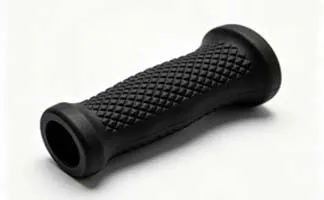
Textured
Best for ergonomic grips, handles, consumer product enclosures, tool handles


