The Benefits of Vapor Smoothing Finishing
A suitable vapor smoothing finish can provide several benefits for 3D printed parts:
- Reduced visible layer lines and powder-bed texture.
- A smoother, more uniform surface appearance.
- Reduced surface porosity on compatible materials.
- Easier cleaning for selected applications.
- Less manual finishing than sanding individual surfaces.
- A better surface for selected dyeing, painting, or assembly. operations.
- Improved cosmetic quality for prototypes and production parts.
Vapor smoothing is not a universal finishing method. Sharp details, fine text, tight mating surfaces, internal channels, and dimensional requirements must be assessed before production

Process of Vapor Smoothing Finishing Services

Process Control
We use advanced automated chambers with precise regulation of temperature, vapor concentration, and exposure time.

Printing Technologies
Common 3D printing methods, plus CNC‑machined thermoplastic parts delivering consistent smoothing regardless of how your component was originally produced.

Batch & Volume
Flexible capacity supports single prototypes, small test batches, and continuous high‑volume production runs, with consistent quality and lead times scaled to your project needs.

Complex Geometries
Uniformly smooths intricate shapes, fine features, internal channels, and thin walls vapor reaches all surfaces evenly without damaging delicate details or altering fit.

Post‑Finish Integration
Seamlessly pairs with dyeing, painting, pad printing, UV coating, metallization, labeling, and assembly all under one roof to streamline your full workflow.

Quality Assurance
Includes dimensional verification, surface roughness testing, visual inspection, and process documentation ensuring every part meets your specs before delivery.
Lead Time for Vapor Smoothing Finishing Services
MXY Machining offer flexible lead times tailored to your project schedule and urgency. All timelines start from full confirmation of design specifications, material approval, and order details. Every schedule already includes time for engineering review, precision machining, strict quality inspection, required surface treatments, and secure packaging. We also provide regular progress updates throughout production, and can arrange custom priority schedules for time‑sensitive projects.
Project Type |
Standard Lead Time |
Express Service |
|---|---|---|
Small Batch or Prototypes | 2 – 4 working days | 1 – 2 working days |
Medium or Complex Parts | 3 – 6 working days | On request |
High‑Volume Production | 5 – 10 working days | Scheduled priority |
Vapor Smoothing Finishing Materials
We work with a wide range of certified, traceable materials selected to match your performance, regulatory, and application requirements. Our engineers provide DFM guidance to optimize your plastic and metal parts design for manufacturing. Contact us or upload a CAD file for material options, instant quotes, and custom production solutions

ABS (Acetone Vapor Smoothing)
The classic and most widely vapor-smoothed material. Acetone vapor dissolves the outer surface, completely eliminating layer lines and producing a high-gloss, injection-molded-like finish. Fast, low-cost, and predictable. Parts become air- and water-tight. Best for functional prototypes, enclosures, and cosmetic parts. Note: parts can slightly deform if over-exposed.

ASA (Acetone / MEK Vapor Smoothing)
A weather-resistant alternative to ABS that responds well to acetone or MEK vapor smoothing. Produces a glossy, sealed surface while retaining ASA’s superior UV and weather resistance ideal for outdoor prototypes. The smoothing process also improves chemical resistance. Slightly slower than ABS due to ASA’s higher styrene-acrylate content.

PEI
A high-performance material that smooths with dichloromethane (DCM), MEK, or specialized PC solvents. Vapor smoothing restores PC’s optical clarity, dissolving layer lines to produce a transparent, glossy finish nearly indistinguishable from injection-molded PC.

PETG (Solvent Vapor Smoothing)
Responds well to dichloromethane (DCM) or tetrahydrofuran (THF) vapor, producing a clear, glossy, glass-like finish that restores PETG’s natural transparency. Layer lines dissolve completely, and the sealed surface improves chemical and moisture resistance. PETG’s higher Tg makes it less prone to deformation than PLA during smoothing.

Nylon / Polyamide (PA) (Formic Acid Vapor Smoothing)
A more specialized vapor smoothing process using formic acid or proprietary nylon smoothing solutions. Dissolves the surface layer to produce a smooth, glossy, sealed finish that significantly improves nylon’s moisture resistance and mechanical properties parts become stronger and more ductile.

PLA (Chemical Vapor Smoothing)

TPU / TPE (Solvent Vapor Smoothing)
Flexible elastomers can be vapor-smoothed with solvents like dimethylformamide (DMF), THF, or proprietary TPU smoothing solutions. The process dissolves layer lines to produce a smooth, glossy, rubber-like surface that feels closer to molded silicone or rubber.

Resin
A high-performance blend that smooths readily with acetone vapor, combining ABS’s easy processability with PC’s strength and heat resistance. Vapor smoothing produces a glossy, injection-molded-quality finish while sealing the surface against moisture and chemicals. The blend is more dimensionally stable during smoothing than pure ABS.
Vapor Smoothing for MJF and SLS Parts
Vapor smoothing MJF and vapor smoothing SLS parts are common use cases when a smoother polymer surface is required. MJF and SLS parts can have a granular or matte texture directly after printing. For compatible nylon materials, vapor smoothing may help create a more refined and consistent appearance. This finishing route may be suitable for:
- Product housings and enclosures
- Functional prototypes
- Consumer-product components
- Covers, grips, and handles
- Low-volume production parts
- Parts requiring a more refined cosmetic finish
Design Considerations for Vapor Smoothing
For the best result from a vapor smoothing service, provide MXY Machining with a 3D CAD file and clear part requirements. Our team can review the design before production and identify potential finishing considerations. Important details to share include:
- Material and 3D printing process
- Required quantity
- Target delivery date
- Cosmetic finish expectations
- Critical dimensions and tolerance areas
- Threads, snap fits, sealing surfaces, and mating features
- Secondary finishing requirements, such as dyeing or painting
- End-use environment and application
Surface Finishes for Vapor Smoothing Finishing

As-Printed
Best for secondary to dimensional accuracy and cost efficiency.

Sanded & Smooth
Best for painting or a refined matte finish without chemical processing.

Vapor Smoothed
Best for Consumer electronics housings, automotive trim, panels parts

Primed & Painted
Best for consumer products, automotive prototypes, and showcase models.

Dyed
Best for functional nylon parts and consumer products,

High-Gloss Polished
Best for optical components, cosmetic prototypes, premium consumer products

Metal Electroplated
Best for decorative figurines, jewelry, automotive emblems, hardware, and functional parts

Hydro Dipped
Best for automotive interior trim, consumer electronics, sporting goods

Resin Coated
Best for consumer products, display models, art pieces
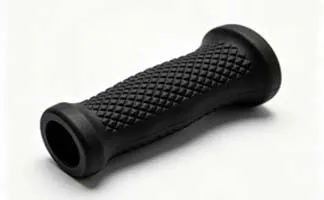
Textured
Best for ergonomic grips, handles, consumer product enclosures, tool handles