


Our Surface Finishing Sevices

As-Machined
Best for Functional internal parts, brackets, hidden components, prototypes parts.

Brushing
Best for architectural trim, consumer products, panels, aesthetic parts

Bead Blasting
Best for Consumer electronics housings, automotive trim, panels parts

Polishing
Best for Reflectors, cosmetic trim, optical components, food-grade surfaces

Passivation
Best for All stainless steel parts, especially food/medical/industrial applications

Electropolishing
Best for Medical devices, food processing equipment, pharmaceutical parts,

Black Oxide
Best for Hand tools, firearms, automotive parts, fasteners, decorative black parts,

E-Coating
Best for Automotive parts, fasteners, complex geometries, high-volume production,

Nickel (EN)
Best for Fasteners, brackets, stamped parts, automotive components,

Deburring
Best for Consumer electronics housings, automotive trim, panels,

As-Molded
Best for Functional internal parts, brackets, hidden components, prototypes parts.

Flame Polished
Best for architectural trim, consumer products, panels, aesthetic parts
Bead Blasting
Best for Consumer electronics housings, automotive trim, panels parts

Polishing
Best for Reflectors, cosmetic trim, optical components, food-grade surfaces

Buffed
Best for All stainless steel parts, especially food/medical/industrial applications

Matte Finish
Best for Medical devices, food processing equipment, pharmaceutical parts,

Heat Formed
Best for Hand tools, firearms, automotive parts, fasteners, decorative black parts,

Chrome Plated
Best for Automotive parts, fasteners, complex geometries, high-volume production,

Painted
Best for Fasteners, brackets, stamped parts, automotive components,

Textured
Best for Consumer electronics housings, automotive trim, panels,

As-Printed
Best for secondary to dimensional accuracy and cost efficiency.

Sanded & Smooth
Best for painting or a refined matte finish without chemical processing.

Vapor Smoothed
Best for Consumer electronics housings, automotive trim, panels parts

Primed & Painted
Best for consumer products, automotive prototypes, and showcase models.

Dyed
Best for functional nylon parts and consumer products,

High-Gloss Polished
Best for optical components, cosmetic prototypes, premium consumer products

Metal Electroplated
Best for decorative figurines, jewelry, automotive emblems, hardware, and functional parts

Hydro Dipped
Best for automotive interior trim, consumer electronics, sporting goods

Resin Coated
Best for consumer products, display models, art pieces
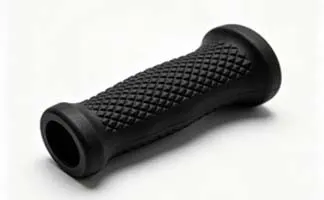
Textured
Best for ergonomic grips, handles, consumer product enclosures, tool handles
As-Fabricated (Raw / Mill Finish)
Passivation process
Default finish straight from sheet metal fabrication cutting, bending, and welding with no secondary treatment. Visible shear cut edges, bend lines, weld seams, and native mill finish. Suitable for structural brackets, internal frames, and functional components where cosmetic appearance is secondary to strength and cost.

Brushed / Grain Finish
Passivation process
Mechanical brushing with abrasive belts creates a uniform directional linear grain pattern across sheet metal. Hides scratches and surface imperfections, produces a consistent semi-matte appearance. The most popular decorative finish for stainless steel and aluminum — used for kitchen equipment, architectural panels, appliance housings, and consumer product enclosures.

Polished / Mirror Finish
Passivation process
Mechanical polishing with progressively finer compounds and buffing wheels produces a highly reflective, mirror-like surface. Removes all scratches, tool marks, and imperfections achieving the highest possible gloss. Used for stainless steel food service equipment, medical instruments, architectural trim, decorative panels, and premium consumer products requiring a flawless reflective finish.

Bead Blasted / Satin
Passivation process
High-pressure blasting with glass beads or aluminum oxide creates a uniform matte satin, non-reflective surface. Hides weld seams, scratches, and surface inconsistencies, produces a consistent fine grain texture. Used for aluminum and stainless steel brackets, enclosures, medical devices, and industrial components where a clean, uniform, non-glare matte appearance is desired.

Powder Coated
Passivation process
Electrostatic dry powder paint followed by thermal curing creates a durable, uniform matte or satin finish. Available in any RAL color, provides excellent corrosion and scratch resistance, thicker and more durable than wet paint. The most popular protective/decorative finish for steel and aluminum enclosures, electrical boxes, machine housings, and outdoor industrial equipment.

Anodized (Aluminum)
Passivation process
Electrochemical process creates a hard, corrosion-resistant, dyeable aluminum oxide layer on aluminum sheet metal. Available in any color (black, blue, red, clear), provides wear protection and improved corrosion resistance. Widely used for aluminum enclosures, electronic housings, aerospace components, and architectural panels requiring a durable, colored, corrosion-resistant finish.

Galvanized (Steel)
Passivation process
Hot-dip galvanizing immerses steel in molten zinc, creating a thick, corrosion-resistant zinc-iron alloy coating with a characteristic spangled crystalline pattern. Provides excellent long-term corrosion protection for outdoor and structural applications. Used for steel brackets, structural frames, outdoor equipment, fencing, and any steel component requiring durable rust protection in harsh environments.

Painted / Wet Paint
Passivation process
Conventional spray painting with liquid paint (acrylic, epoxy, polyurethane) applied over a primed surface, available in any custom color and gloss level. Provides good corrosion protection and decorative color ideal for parts requiring custom color matching, intricate masking, or multi-color finishes where powder coating is not practical. Used for industrial equipment, automotive parts, and custom enclosures.

Black Oxide (Steel)
Passivation process
Chemical conversion coating creates a uniform matte black finish on steel sheet metal. Minimizes light reflection, provides mild corrosion protection, and does not affect dimensional accuracy. Used for steel tooling, fixtures, optical components, and hardware where a non-reflective black surface is desired often combined with oil or wax topcoat for enhanced corrosion protection.

Passivated (Stainless Steel)
Passivation process
Chemical treatment (citric or nitric acid) removes free iron and contaminants from stainless steel surfaces, restoring and enhancing the protective chromium oxide layer for improved corrosion resistance. Does not change appearance, dimensions, or surface texture. Standard post-fabrication treatment for all 304/316 stainless steel parts — especially medical instruments, food service equipment, pharmaceutical components, and outdoor stainless applications.

Grinding & Lapping
Passivation process
Abrasive machining process using grinding wheels or lapping compounds to remove material and produce extremely flat, smooth surfaces with tight dimensional tolerances (Ra 0.1–0.8 µm). Surface grinding produces flat parts, cylindrical grinding produces round shafts, and lapping achieves ultra-flat mirror-like surfaces. Essential for precision gauges, bearing surfaces, die sets, and any component requiring extreme flatness and surface accuracy.

Polishing & Buffing
Passivation process
Mirror polishing is a finishing process that gives metal a smooth, shiny, mirror-like surface. It works by using abrasive compounds starting coarse and moving to progressively finer grades along with soft cloth or felt buffing wheels to remove scratches, tool marks, and other surface flaws. This process achieves the highest possible shine, with a surface roughness of about Ra 0.025–0.1 µm (extremely smooth). It’s commonly used for decorative stainless steel panels, medical instruments, automotive trim, jewelry, and premium consumer products that need a flawless, reflective finish.

Bead / Abrasive Blasting
Passivation process
High-pressure projection of glass beads, aluminum oxide, or other abrasive media onto a surface to create a uniform matte satin, non-reflective finish. Hides scratches, weld seams, and surface inconsistencies, produces a consistent fine grain texture (Ra 0.8–3.2 µm). Used for aluminum and stainless steel brackets, enclosures, medical devices, and industrial components where a clean, uniform, non-glare matte appearance is desired.

Brushing / Grain Finishing
Passivation process
Mechanical brushing with abrasive belts or nylon brushes creates a uniform directional linear grain pattern across the surface. Hides scratches and surface imperfections, produces a consistent semi-matte appearance (Ra 0.4–1.6 µm). The most popular decorative finish for stainless steel and aluminum are used for kitchen equipment, architectural panels, appliance housings, and consumer product enclosures requiring a refined directional texture.

Deburring & Edge Breaking
Passivation process
Post-machining process that removes burrs, sharp edges, and residual material from cut or machined surfaces, producing clean, smooth, safe-to-handle edges. Methods include hand deburring, tumbling, vibratory finishing, and thermal deburring. Standard for all handled parts, assemblies, and components where sharp edges would be a safety concern or interfere with assembly that’s essential for quality and safety in every manufacturing process.

Anodized (Aluminum)
Passivation process
Electrochemical process that creates a hard, corrosion-resistant, dyeable aluminum oxide layer on aluminum surfaces. Available in any color (black, blue, red, clear), provides wear protection and improved corrosion resistance. Type II (standard) for general use, Type III (hard coat) for high-wear applications. Widely used for aluminum enclosures, electronic housings, aerospace components, and architectural panels requiring a durable, colored, corrosion-resistant finish.

Electropolishing
Passivation process
Electrochemical process that removes a thin layer of metal from the surface by anodic dissolution in an electrolyte bath, producing an ultra-smooth, bright, highly reflective finish (Ra 0.05–0.4 µm). Removes micro-burrs, improves corrosion resistance, and creates a clean, sterile surface. Widely used for stainless steel medical instruments, food processing equipment, pharmaceutical components, and any application requiring ultra-clean, corrosion-resistant surfaces.

Plating (Chrome / Nickel / Gold)
Passivation process
Electrochemical deposition of a thin metal layer (chrome, nickel, gold, silver, zinc, tin) onto a substrate surface to improve appearance, corrosion resistance, wear resistance, or electrical conductivity. Chrome plating provides a bright, hard, reflective finish; nickel plating provides corrosion protection and a smooth base; gold plating provides excellent conductivity and tarnish resistance. Used for automotive trim, electrical contacts, fasteners, and decorative hardware.

Plating (Chrome, Nickel, Gold)
Passivation process
Powder coating: electrostatic dry powder paint followed by thermal curing creates a durable, uniform matte or satin finish in any RAL color, with excellent corrosion and scratch resistance. Wet painting: conventional liquid paint (acrylic, epoxy, polyurethane) applied over a primed surface, available in any custom color and gloss level. Both provide protective and decorative finishes for enclosures, equipment housings, automotive parts, and outdoor industrial components.

Passivation & Conversion Coating
Passivation process
Passivation: chemical treatment (citric or nitric acid) removes free iron and contaminants from stainless steel, restoring and enhancing the protective chromium oxide layer for improved corrosion resistance does not change appearance or dimensions. Conversion coating (chromate, phosphate, black oxide): chemical process creates a thin protective layer on metal surfaces, improving paint adhesion and corrosion resistance. Standard post-fabrication treatment for stainless steel, steel, and aluminum components.


