Explore the revolutionary techniques of plasma processing for metals, enabling advanced fabrication under extreme conditions. Discover applications in microelectronics, thermal barrier coatings, and additive manufacturing, as well as the benefits of ionized plasmas in engineering high-performance materials. The document covers a comprehensive exploration of plasma-state metal manipulation, starting with an introduction to plasma processing and its significance in materials engineering. It discusses the rising global interest in plasma science, highlighting trends and research initiatives.
The section on plasma processing of metals outlines the advantages of this technique over traditional methods. Various plasma metalworking techniques are detailed, including common plasma sources and their applications. The document also delves into extreme condition fabrication, examining ionized metal plasmas and their properties, alongside fusion-based metal processing and its implications for material science. It explores ionized metal interactions, focusing on kinetic energy and penetration depth, as well as plasma-material coupling and atomic interactions. Non-equilibrium states and their engineering implications are also discussed. The applications of plasma metal processing are highlighted, including thermal barrier coatings, metallization in microelectronics, and additive manufacturing techniques.
Plasma processing techniques enable innovative materials engineering through manipulation of metals in an ionized state. When sufficient energy is imparted to strip electrons from atoms, ordinary gases or solids can be transformed into reactive ionized plasmas exhibiting unique properties. Controlled interactions between energetic metal plasmas and target materials underpin emerging fabrication methods collectively termed plasma metalworking.
What Is Plasma Processing?

Plasma processing refers to manufacturing methods that use plasma as an energy source. Plasma is often called the fourth state of matter. When enough energy is added to a gas, some of its atoms become ionized. The gas then contains charged particles and becomes electrically conductive. In manufacturing, this ionized gas can be controlled and directed toward a metal surface.
Depending on the process, plasma can be used for cut metal, create welds, melt metal, deposit coatings, harden or modify surfaces, process metal powders and repair worn components. The important point is that the whole metal part does not normally become plasma. Instead, the plasma transfers concentrated energy to a specific area of the workpiece.
Why Plasma Processing Is Useful in Extreme Fabrication
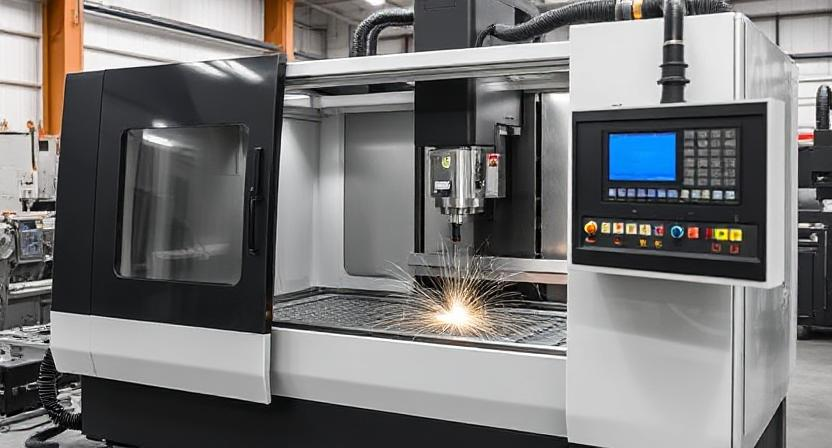
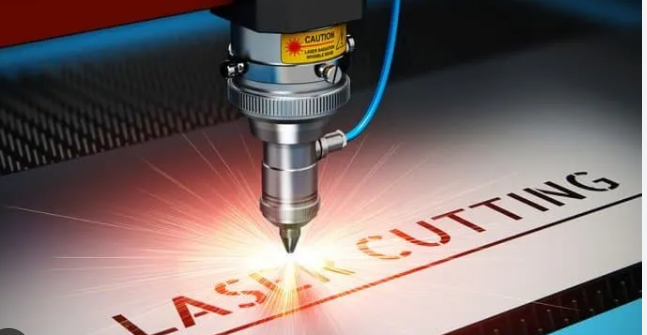
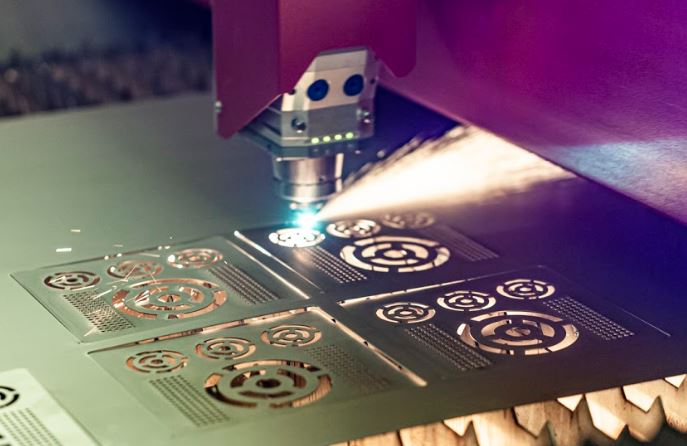
Many conventional manufacturing processes, including CNC machining, laser cutting, waterjet cutting, casting, and welding, are suitable for normal production conditions and can process a wide range of materials. However, some applications involve extremely high temperatures, difficult alloys, or severe operating environments where conventional methods may be less effective. In these situations, plasma-based metal processing is useful because it can generate highly concentrated energy in a controlled area. This makes plasma technology valuable in aerospace systems, power generation, heavy machinery, oil and gas equipment, automotive manufacturing, industrial tooling, medical components, and advanced materials research. Plasma systems can also process metals and alloys that may be difficult to cut, weld, melt, or coat using lower-temperature manufacturing techniques.
Suitable Materials for Plasma-Based Metal Processing
Material |
Common Plasma Applications |
|---|---|
Carbon Steel | Cutting, welding, hardfacing |
Stainless Steel | Cutting, welding, coating |
Aluminum | Cutting and joining |
Titanium | Welding, melting, powder processing |
Nickel Alloys | Melting, coating, hardfacing |
Cobalt Alloys | Wear-resistant hardfacing |
Copper Alloys | Cutting and specialized processing |
Ceramics | Thermal and protective coatings |
Tungsten Materials | Coating and advanced applications |
Important Plasma Processing Parameters

Electrical Current
Higher current can increase melting or cutting capacity, but it must match the material and process requirements.

Gas Type
Different plasma gases influence arc behavior and heat transfer.

Gas Flow Rate
Correct gas flow helps stabilize the plasma and control heat transfer.

Torch Distance
The distance between the torch and workpiece affects energy concentration and process consistency.

Travel Speed
The torch movement speed influences heat input, penetration, surface quality, and distortion.

Cooling
Many plasma systems require controlled cooling to protect the torch and maintain stable operation.
Advantages of Plasma-Based Metal Processing
Advantages |
Limitations |
|---|---|
High energy concentration allows intense heat to be applied to a small, controlled area. | High heat input can create heat-affected zones and thermal distortion. |
Fast cutting speed makes plasma useful for efficient metal fabrication. | Lower precision than CNC machining or laser cutting for very fine features and tight tolerances. |
Suitable for difficult alloys such as stainless steel, titanium, nickel alloys, and other high-performance metals. | Limited to suitable materials and processes, depending on the type of plasma system used. |
Deep welding capability can provide strong penetration in some joining applications. | Specialized equipment is required, including power supplies, gas systems, torches, and cooling units. |
Effective for coating and hardfacing, improving wear, corrosion, and thermal resistance. | Consumable parts wear over time, especially electrodes and nozzles. |
Useful for surface modification without changing the entire component. | Process control can be complex, requiring careful adjustment of current, gas flow, speed, and torch distance. |
Supports metal powder processing, including plasma spheroidization for additive manufacturing. | High operating temperatures may change material microstructure if the process is not properly controlled. |
Plasma-based metal processing offers several important advantages for advanced manufacturing. One of its main benefits is the ability to generate a highly concentrated heat source, allowing manufacturers to process materials that require very high temperatures or localized energy. This makes plasma technology suitable for fast metal cutting, deep welding, high-temperature coating deposition, surface modification, wear-resistant hardfacing, and the processing of difficult alloys.
Plasma systems can also improve the shape and quality of metal powders used in advanced manufacturing. In addition, plasma technologies can be integrated with automated and CNC-controlled systems, helping manufacturers achieve better repeatability, process consistency, and overall production control.
Plasma Processing vs CNC Machining
Plasma processing and CNC machining serve different manufacturing purposes. Plasma-based processes use concentrated thermal energy to cut, weld, coat, melt, or modify metals, while CNC machining removes material mechanically with cutting tools to create precise dimensions and complex three-dimensional features. Plasma processing is often preferred for high-energy operations and demanding materials, whereas CNC machining is generally better when tight tolerances, fine surface finishes, and detailed geometry are required.
Factor |
Plasma Processing |
CNC Machining |
|---|---|---|
Main principle | Uses high-energy plasma to cut, melt, weld, coat, or modify metal | Uses rotating or stationary cutting tools to remove material |
Heat input | High thermal energy | Mainly mechanical cutting with lower localized heat |
Precision | Depends on process; generally lower for cutting operations | High dimensional accuracy and repeatability |
Complex 3D features | Limited in conventional plasma cutting | Excellent for pockets, holes, threads, contours, and 3D surfaces |
Material capability | Useful for conductive metals, difficult alloys, coatings, and high-temperature applications | Suitable for a wide range of metals and engineering plastics |
Cutting speed | Very fast for many sheet and plate applications | Usually slower for large-volume material removal |
Best applications | Cutting, welding, hardfacing, coatings, melting, and surface treatment | Precision parts, threads, bores, pockets, molds, housings, and complex components |
Typical role in production | High-energy processing or rough shaping | Final dimensional control and precision finishing |
Applications of Plasma Processing

The Future of Plasma Processing
Plasma processing is used across many industries where components must withstand high temperatures, wear, corrosion, or other demanding operating conditions. In aerospace manufacturing, plasma-based coatings can help protect turbine and engine components from heat and surface degradation. In the energy sector, plasma processing is used for parts in power-generation equipment, pumps, valves, and other systems that require durable surfaces.
Heavy machinery and industrial equipment can benefit from plasma hardfacing and surface treatment to improve resistance to abrasion, erosion, and impact. In automotive manufacturing, plasma cutting and coating processes are used for structural parts, tooling, and components exposed to heat or wear. Plasma technology is also applied in oil and gas equipment, medical devices, and advanced materials research. In additive manufacturing, plasma treatment can improve the shape and flow properties of metal powders, making them more suitable for powder-based 3D printing processes.
Another important area of development is the connection between plasma technology and advanced materials manufacturing. Plasma processing may play a larger role in metal powder treatment, additive manufacturing, surface engineering, and material recycling. Techniques such as plasma spheroidization can improve powder shape and flow characteristics, while advanced plasma coatings can help components perform better in high-temperature, wear-resistant, and corrosive environments. As these technologies continue to improve, plasma processing is likely to become more closely integrated with CNC machining, robotics, and smart manufacturing systems.
Conclusion
Plasma processing is an important manufacturing technology for applications that require concentrated energy, high temperatures, advanced surface treatment, or the processing of difficult materials. It can be used for cutting, welding, coating, hardfacing, melting, and metal powder treatment across industries such as aerospace, automotive, energy, heavy machinery, and additive manufacturing. Although plasma-based processes can create challenges such as heat-affected zones, equipment complexity, and higher energy use, they offer strong advantages in speed, flexibility, and extreme-condition fabrication. When combined with CNC machining, inspection, automation, and surface finishing, plasma processing can become part of a complete manufacturing workflow that improves both productivity and component performance.
Frequently ASsked Questions
What is plasma-based metal processing?
Plasma-based metal processing uses high-energy ionized gas to cut, weld, melt, coat, hardface, or modify metal surfaces. It is commonly used when high temperatures or concentrated energy are required.
Which metals can be processed using plasma?
Plasma processes can be used with carbon steel, stainless steel, aluminum, titanium, nickel alloys, copper alloys, cobalt alloys, and other electrically conductive engineering metals.
Does the metal itself become plasma during processing?
Usually, no. The gas becomes ionized and forms the plasma. The plasma then transfers concentrated heat to the metal, causing localized melting, cutting, welding, coating, or surface modification.
What are the main types of plasma metal processing?
Common plasma-based processes include plasma cutting, plasma arc welding, plasma spraying, plasma transferred arc hardfacing, plasma arc melting, and plasma treatment of metal powders.
What are the main advantages of plasma processing?
The main advantages include high energy concentration, fast cutting, deep welding capability, processing of difficult alloys, surface coating, wear-resistant hardfacing, and compatibility with automated systems.