

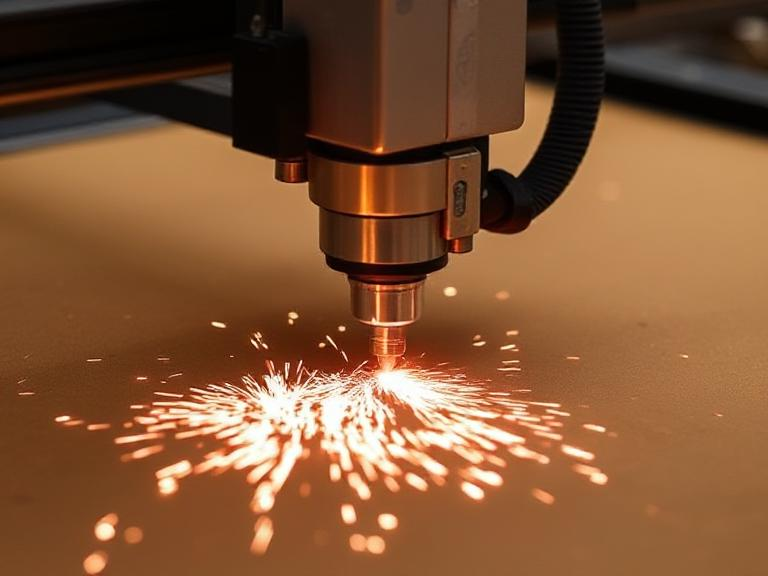
Benefits of Laser Cutting Services

Laser Cutting Services Standard Tolerances
Laser cutting services follow ISO 2768‑m standard tolerances. Cutting precision varies with sheet metal thickness. Thin plates achieve tighter accuracy. Secondary finishing is needed for ultra‑critical features on functional components.
Material Thickness |
Dimensional Tolerance |
Typical Kerf Width |
Edge Squareness |
Heat-Affected Zone (HAZ) |
|---|---|---|---|---|
0.5 mm – 6 mm | ± 0.05 mm – ± 0.10 mm | 0.15 mm – 0.25 mm | 0.05 mm / 100 mm | < 0.2 mm |
6 mm – 12 mm | ± 0.10 mm – ± 0.15 mm | 0.20 mm – 0.30 mm | 0.08 mm / 100 mm | < 0.3 mm |
12 mm – 20 mm | ± 0.15 mm – ± 0.20 mm | 0.25 mm – 0.35 mm | 0.10 mm / 100 mm | < 0.4 mm |
20 mm – 25 mm | ± 0.20 mm – ± 0.25 mm | 0.30 mm – 0.40 mm | 0.15 mm / 100 mm | < 0.5 mm |
Laser Cutting Service Capabilities
MXY Machining comprehensive Laser cutting services adopts CNC laser equipment. It produces complex geometry on various sheet metal. Supports prototype and batch production, accepts CAD files for fast‑turn custom metal component manufacturing.

We cut mild steel, stainless steel, aluminum, copper, galvanized steel and alloys. High-power lasers handle reflective metals stably, lightly rusted or coated sheets work with simple cleaning for flexible fabrication selection.


Lead Time for Laser Cutting Service
Lead time for laser cutting service depends on part size and batch production. Standard custom metal parts take 2‑5 business days. Rush order is available if required raw materials are in‑house stock.
Order Classification |
Project Features |
Standard Lead Time |
|---|---|---|
Standard Order | Simple regular shapes, small batches, conventional steel materials | 3–5 business days |
Complex & High-Volume Order | Intricate curves, dense small holes, large batch sizes, aluminum/stainless steel thick plates | 5–8 business days |
Expedited Rush Order | Emergency spare parts, urgent engineering components | 1–2 business days |
Laser Cutting Services Materials
Laser‑cutting services process carbon steel, stainless steel, aluminum and copper. It also handles non‑metals such as acrylic and plastic. Process performance varies with material type and sheet thickness for custom‑made components.
Visit our materials page for a full list.
Surface Finishes for Laser Cutting Services
Laser cutting generates slight oxide residues and sharp edges. Deburring and oxide removal improve surface quality. Additional finishes like brushing and powder coating are available for aesthetic and functional metal parts.
As-Fabricated (Raw / Mill Finish)
Passivation process
Default finish straight from sheet metal fabrication cutting, bending, and welding with no secondary treatment. Visible shear cut edges, bend lines, weld seams, and native mill finish. Suitable for structural brackets, internal frames, and functional components where cosmetic appearance is secondary to strength and cost.

Brushed / Grain Finish
Passivation process
Mechanical brushing with abrasive belts creates a uniform directional linear grain pattern across sheet metal. Hides scratches and surface imperfections, produces a consistent semi-matte appearance. The most popular decorative finish for stainless steel and aluminum — used for kitchen equipment, architectural panels, appliance housings, and consumer product enclosures.

Polished / Mirror Finish
Passivation process
Mechanical polishing with progressively finer compounds and buffing wheels produces a highly reflective, mirror-like surface. Removes all scratches, tool marks, and imperfections achieving the highest possible gloss. Used for stainless steel food service equipment, medical instruments, architectural trim, decorative panels, and premium consumer products requiring a flawless reflective finish.

Bead Blasted / Satin
Passivation process
High-pressure blasting with glass beads or aluminum oxide creates a uniform matte satin, non-reflective surface. Hides weld seams, scratches, and surface inconsistencies, produces a consistent fine grain texture. Used for aluminum and stainless steel brackets, enclosures, medical devices, and industrial components where a clean, uniform, non-glare matte appearance is desired.

Powder Coated
Passivation process
Electrostatic dry powder paint followed by thermal curing creates a durable, uniform matte or satin finish. Available in any RAL color, provides excellent corrosion and scratch resistance, thicker and more durable than wet paint. The most popular protective/decorative finish for steel and aluminum enclosures, electrical boxes, machine housings, and outdoor industrial equipment.

Anodized (Aluminum)
Passivation process
Electrochemical process creates a hard, corrosion-resistant, dyeable aluminum oxide layer on aluminum sheet metal. Available in any color (black, blue, red, clear), provides wear protection and improved corrosion resistance. Widely used for aluminum enclosures, electronic housings, aerospace components, and architectural panels requiring a durable, colored, corrosion-resistant finish.

Galvanized (Steel)
Passivation process
Hot-dip galvanizing immerses steel in molten zinc, creating a thick, corrosion-resistant zinc-iron alloy coating with a characteristic spangled crystalline pattern. Provides excellent long-term corrosion protection for outdoor and structural applications. Used for steel brackets, structural frames, outdoor equipment, fencing, and any steel component requiring durable rust protection in harsh environments.

Painted / Wet Paint
Passivation process
Conventional spray painting with liquid paint (acrylic, epoxy, polyurethane) applied over a primed surface, available in any custom color and gloss level. Provides good corrosion protection and decorative color ideal for parts requiring custom color matching, intricate masking, or multi-color finishes where powder coating is not practical. Used for industrial equipment, automotive parts, and custom enclosures.

Black Oxide (Steel)
Passivation process
Chemical conversion coating creates a uniform matte black finish on steel sheet metal. Minimizes light reflection, provides mild corrosion protection, and does not affect dimensional accuracy. Used for steel tooling, fixtures, optical components, and hardware where a non-reflective black surface is desired often combined with oil or wax topcoat for enhanced corrosion protection.

Passivated (Stainless Steel)
Passivation process
Chemical treatment (citric or nitric acid) removes free iron and contaminants from stainless steel surfaces, restoring and enhancing the protective chromium oxide layer for improved corrosion resistance. Does not change appearance, dimensions, or surface texture. Standard post-fabrication treatment for all 304/316 stainless steel parts — especially medical instruments, food service equipment, pharmaceutical components, and outdoor stainless applications.


