


Benefits of Fused Deposition Modeling
Fused Deposition Modeling (FDM) is a practical 3D printing process for plastic prototypes, functional parts, fixtures, and low-volume components. It builds parts layer by layer from thermoplastic filament, avoiding the cost and lead time of dedicated tooling. FDM is useful for fit checks, functional testing, design revisions, housings, brackets, jigs, and assembly aids. Materials can be selected for strength, flexibility, heat resistance, weather performance, or appearance. Parts may be supplied as printed or finished through sanding, painting, machining, or threaded inserts. For tighter tolerances, smoother surfaces, or higher production volumes, MXY Machining can recommend a more suitable manufacturing process.

FDM Standard Tolerances
| Tolerance Note | Description |
|---|---|
| General Tolerance | +/- a single build layer thickness for the first inch and +/- .002” for every inch thereafter. |
| Build Size | Up to 24″ x 36″ x 36″ |
| Layer Height, less than 16″ | 0.010″ Layers (0.008″ for PLA) |
| Layer Height, greater than 16″ (up to 36″) | 0.013″ Layers |
| Minimum Wall Thickness | 0.047″ (less than 16″), 0.060″ (greater than 16″) |
Fused Deposition Modeling Service Process

1. Upload Your CAD File
Send your 3D model in a common format such as STEP, STP, STL, OBJ, or 3MF. Include the required quantity, material preference, intended application, finish requirements, and any dimensioned drawing for critical features.
![FDM]-Design-and-Manufacturability-Review](https://mxymachining.b-cdn.net/wp-content/uploads/2024/10/FDM-Design-and-Manufacturability-Review.webp)
2. Design and Manufacturability Review
Our team reviews the part geometry for wall thickness, overhangs, unsupported features, part orientation, tolerances, and assembly requirements. If needed, we recommend design adjustments that can improve printability, strength, surface quality, and cost.

3. Material and Process Selection
Choose a suitable FDM material based on the part’s functional needs. Options may include ABS, ASA, PLA, PETG, TPU, nylon, polycarbonate, or reinforced thermoplastics, subject to verified availability. We also confirm the required layer height, infill strategy, support requirements, and build orientation.

4. FDM 3D Printing
The selected thermoplastic filament is heated and deposited layer by layer to form the part. This process allows efficient production of complex geometries, custom fixtures, housings, brackets, and prototypes without dedicated tooling.

5. Support Removal and Post-Processing
After printing, supports are removed and the part is cleaned. Depending on the project requirements, post-processing may include sanding, priming, painting, machining of critical features, threaded inserts, or assembly.

6. Quality Inspection and Delivery
Each order is checked against the agreed project requirements before shipment. For parts with critical dimensions or functional features, provide a drawing and clearly identify inspection requirements during quotation.
Lead Time forFused Deposition Modeling Service
MXY Machining offer flexible lead times tailored to your project schedule and urgency. All timelines start from full confirmation of design specifications, material approval, and order details. Every schedule already includes time for engineering review, precision machining, strict quality inspection, required surface treatments, and secure packaging. We also provide regular progress updates throughout production, and can arrange custom priority schedules for time‑sensitive projects.
Project Type |
Standard Lead Time |
Express Service |
|---|---|---|
Simple Prototypes | 1 – 2 working days | 24‑hour turnaround available |
Functional Parts / Batches | 2 – 5 working days | 2 – 3 working days |
Large / Complex Runs | 5 – 10 working days | Priority scheduling available |
Fused Deposition Modeling Materials
We offer a wide range of CNC machining materials, including metal alloys, plastics, wood, and composites, carefully selected for strength, durability, and cost. Our engineers provide DFM guidance to optimize your plastic and metal parts design for manufacturing.

PLA (Polylactic Acid)
The most popular FDM filament easy to print, low warp, and biodegradable (made from corn starch). Produces smooth surface finishes and vibrant colors. No heated bed or enclosure needed. Ideal for prototypes, display models, figurines, and low-stress parts.

ABS (Acrylonitrile Butadiene Styrene)
A strong, impact-resistant, and heat-tolerant engineering plastic. Requires a heated bed and enclosed printer to prevent warping. Can be acetone-smoothed for a glossy finish. Used for functional parts, automotive components, enclosures, and LEGO-like products.

PETG (Polyethylene Terephthalate Glycol)
Combines the ease of printing of PLA with the strength and heat resistance of ABS. Food-safe, chemical-resistant, and impact-resistant with slight flexibility. Excellent layer adhesion. The go-to material for functional prototypes, containers, and mechanical parts.

TPU (Thermoplastic Polyurethane)
A flexible, rubber-like elastomer with excellent abrasion resistance and elasticity. Shore hardness ranges from 60A to 95A. Requires slow print speeds and direct drive extruders. Used for gaskets, seals, phone cases, footwear, hinges, and vibration-damping parts.

Nylon / Polyamide (PA)
A strong, durable, and wear-resistant engineering plastic with low friction and good chemical resistance. Hygroscopic — requires drying before printing. Excellent for functional mechanical parts, gears, bearings, bushings, and snap-fit assemblies.

ASA (Acrylonitrile Styrene Acrylate)
Similar mechanical properties to ABS but with superior UV resistance and weatherability. Does not yellow or degrade under sunlight. Requires heated bed and enclosure. The top choice for outdoor parts, automotive exterior trim, garden equipment, and signage.

PEEK (Polyether Ether Ketone)
A strong, wear-resistant engineering plastic with low friction and good mechanical strength. Absorbs moisture, which increases toughness. Widely used for gears, bearings, bushings, fasteners, and high-wear mechanical components.

Polycarbonate (PC)
An extremely strong and impact-resistant transparent engineering plastic with high heat deflection temperature. Requires high nozzle temps (260–310°C) and an enclosed chamber. Used for protective shields, lenses, machine guards, and high-strength transparent parts.

PVA (Polyvinyl Alcohol)
Carbon Fiber Reinforced
A composite filament (PLA-CF, PETG-CF, Nylon-CF, or PEEK-CF) infused with chopped carbon fibers. Delivers exceptional stiffness, dimensional stability, and heat resistance with reduced weight. Requires hardened steel nozzles. Used for drone frames, tooling, jigs, and structural parts.
Fused Deposition Modeling Surface Finishes

As-Printed
Best for secondary to dimensional accuracy and cost efficiency.

Sanded & Smooth
Best for painting or a refined matte finish without chemical processing.

Vapor Smoothed
Best for Consumer electronics housings, automotive trim, panels parts

Primed & Painted
Best for consumer products, automotive prototypes, and showcase models.

Dyed
Best for functional nylon parts and consumer products,

High-Gloss Polished
Best for optical components, cosmetic prototypes, premium consumer products

Metal Electroplated
Best for decorative figurines, jewelry, automotive emblems, hardware, and functional parts

Hydro Dipped
Best for automotive interior trim, consumer electronics, sporting goods

Resin Coated
Best for consumer products, display models, art pieces
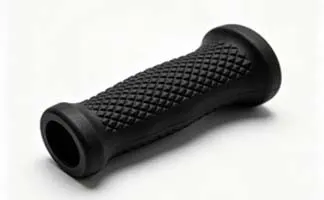
Textured
Best for ergonomic grips, handles, consumer product enclosures, tool handles


