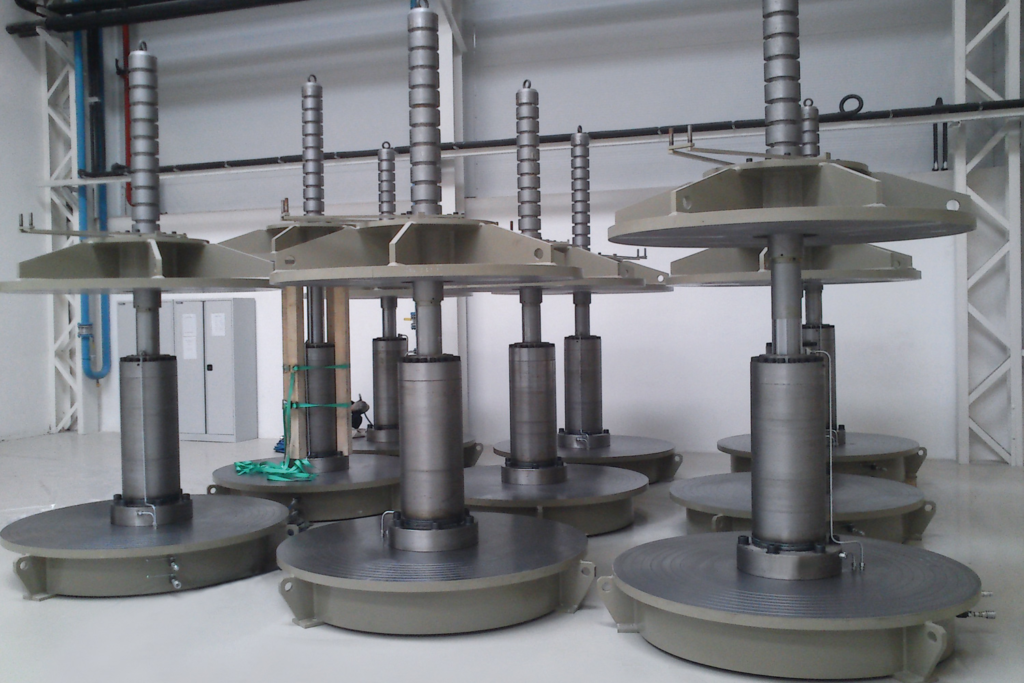
Definition of Alloy Steel 4140 | 1.7225 | EN19 | 42CrMo4
4140 steel, also known as 1.7225, EN19, or 42CrMo4, is a chromium-molybdenum alloy steel with excellent strength, toughness, and hardenability. It contains about 0.40% carbon, 1% chromium, and 0.2% molybdenum. After quenching and tempering, it reaches high tensile strength (800–1200 MPa) while remaining tough. CNC shops machine it in annealed or pre-hardened state for shafts, gears, bolts, tool holders, hydraulic components, and automotive and industrial parts requiring strength and fatigue resistance.
Properties of Alloy Steel 4140 | 1.7225 | EN19 | 42CrMo4
| Property | Value |
|---|---|
| Mechanical Properties | |
| Ultimate tensile strength | 355 – 370 MPa |
| Yield strength | 230 MPa |
| Young’s modulus (modulus of elasticity) | 208 – 216 GPa |
| Elongation at break | 18 – 26 % |
| Physical Properties | |
| Corrosion resistance | Moderate to Poor |
| Magnetism | Semi-Magnetic |
| UV resistance | Excellent |
| Weldability | Moderate |
| Thermal Properties | |
| Maximum service temperature | 613 – 650 °C |
| Thermal expansion coefficient | 11.5 – 13.5 × 10⁻⁶/ºC |
| Thermal conductivity | 42 – 48 W/(m⋅°C) |
| Electrical Properties | |
| Electrical resistivity | 20 – 25 μΩ*cm |
| Post Treatments | |
| Post-Processing | Tempering & Annealing |
| Anodizing compatibility | Not suitable |
| Common Applications | |
| Heavy duty shafts | |
| Connecting rods | |
| High tensile bolts | |
Why Alloy Steel 4140 | 1.7225 | EN19 | 42CrMo4 Matters in CNC Workshops
- High-demand structural material: Alloy Steel 4140 is the most widely used alloy steel for strong, tough parts. Customers in oil/gas, automotive, aerospace, and machinery order it constantly.
- Pre-hardened stock saves time: Alloy Steel 4140 is available pre-hardened to 28–32 HRC, so you can machine the final part directly without post-heat-treatment distortion.
- Premium pricing: Alloy Steel 4140 costs more than mild steel and commands higher machining rates. Stronger material = higher-value orders and better margins.
- Versatile heat treatment: Offering quenching, tempering, induction hardening, and nitriding lets you add value and become a full-service supplier.
Surface Finishes for Alloy Steel 4140 | 1.7225 | EN19 | 42CrMo4
As-Machined
The default finish from CNC machining plastic stock (Delrin, nylon, HDPE, ABS). Visible linear tool path scallop marks across machined surfaces with a matte plastic sheen. No secondary operation suitable for functional components, jigs, fixtures, and internal parts where cosmetic appearance is secondary to dimensional accuracy.

Flame Polished
Quick post-fabrication process that passes a controlled flame over acrylic (PMMA) cut edges, melting the surface micro-layer to produce a crystal-clear, glossy, transparent edge. Fast and cost-effective for acrylic sheet edges produces optical clarity on cut borders without the labor of hand polishing. Ideal for display cases, signage, and acrylic enclosures.

Vapor Polished
Post-fabrication chemical process that exposes transparent plastic parts (acrylic, PC, PETG) to solvent vapor, melting and smoothing the surface micro-layer to dramatically improve optical clarity and gloss. Removes machining lines and produces crystal-clear transparent parts — essential for prototype lenses, light guides, display windows, fluidic chambers, and medical components requiring optical transparency.

Painted
Post-fabrication spray painting in any custom color (matte, satin, gloss, metallic) followed by screen printing or pad printing for logos, labels, buttons, and graphics. Applied over a primed plastic surface for uniform color and adhesion. Allows custom fabricated plastic parts to match production aesthetics widely used for control panels, instrument faces, enclosures, and marketing/showcase components requiring exact brand color and graphic printing.

Sanded
Post-fabrication sanding with progressively finer grit sandpaper (typically 240–600 grit) produces a uniform low-gloss matte non-reflective surface. Hides machining marks, scratches, and surface inconsistencies while providing a soft tactile feel. Used for HDPE, UHMW, and nylon components where a durable, non-glare, fingerprint-resistant matte appearance is desired for industrial and functional parts.

Heat Formed
Thermoforming process that heats plastic sheet (acrylic, polycarbonate, ABS) to its glass transition temperature and bends it over a form tool to create precise angles and curved shapes. Produces clean, smooth bend radii with consistent surface finish no tool marks at the bend. Used for display stands, guards, enclosures, signage, and custom fabricated parts requiring 3D formed shapes from flat sheet stock.